Amazon Business Models: How Brand Ownership Works
An Amazon business can resell existing products or develop products under its own brand. The right model depends on your budget, access to supply, experience, and how much control you want over the customer offer. No model guarantees profit.
It helps to separate two decisions: what you sell and how orders are fulfilled. Private label, wholesale, and retail arbitrage describe how you source and position products. Fulfillment by Amazon, or FBA, describes how eligible orders are stored, packed, and shipped.
Three common Amazon business models
Retail and online arbitrage
This means buying products from retailers and reselling them. It can offer a way to learn sourcing and marketplace operations, but availability, purchase prices, selling permissions, and competition can change. A profitable batch does not guarantee a repeatable supply.
Wholesale
Wholesale sellers buy existing branded products from manufacturers or distributors. Supplier relationships, authorization, order quantities, and competition on shared listings affect the opportunity. The work centers on sourcing reliably and managing the economics of each product.
Private label
Private-label businesses sell products under their own brand, typically working with a manufacturer. This provides more control over product specifications, packaging, and positioning, but adds development, quality-control, inventory, and marketing responsibilities. Owning the brand does not automatically create demand or higher margins.
FBA is a fulfillment service, not a business model
Fulfillment by Amazon can handle storage, packing, shipping, and eligible customer-service and return activities. Sellers still need to manage product selection, compliance, inventory planning, pricing, and the customer promise.
Other fulfillment arrangements may suit some products or businesses better. Compare the operational requirements and costs for the specific products you plan to sell.
Understand the economics before ordering inventory
Revenue is not profit. Build a product-level estimate that includes:
Development, samples, production, and quality checks.
Freight, duties, preparation, and delivery to the fulfillment location.
Selling, fulfillment, storage, and other applicable platform fees.
Advertising, returns, discounts, and ongoing operating expenses.
Cash needed to replenish inventory before earlier sales have fully funded the next order.
Use Amazon’s revenue calculator to estimate applicable fees, then add the costs it does not capture for your business. Test slower sales, higher costs, and delayed replenishment as well as your base case.
Why Angora focuses on brand ownership
Angora’s Acquisition and Brand Launch paths center on owning and operating a brand. The opportunity is to develop a recognizable customer offer, improve products and operations, and build a business over time. Those outcomes require execution and are not assured.
Acquisition starts with an existing business to investigate. Brand Launch starts with a product and customer opportunity to validate. Our acquisition due-diligence guide and brand-building process explain the different work involved.
The Four Stages of a Private-Label Brand on Amazon
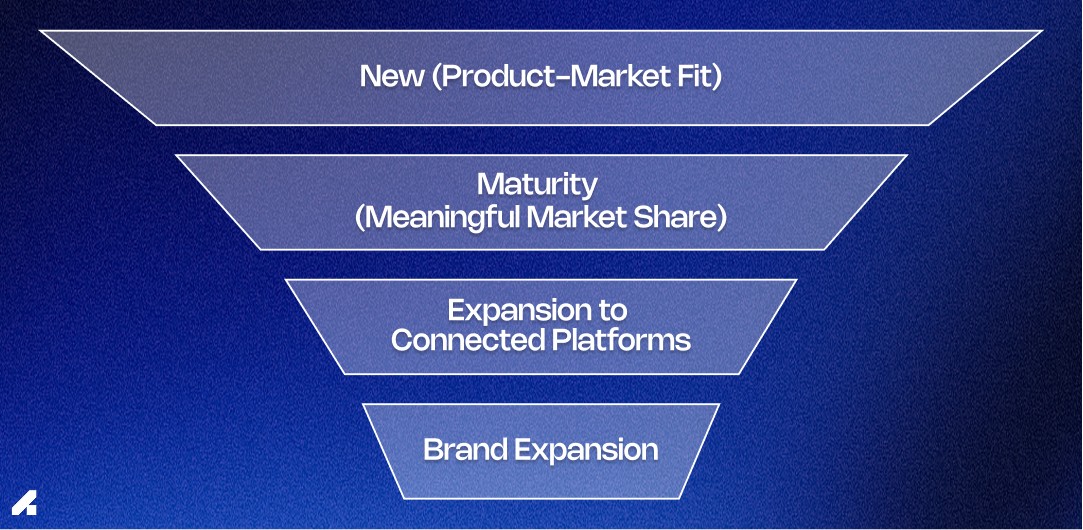
The graphic is a planning framework, not a guaranteed sequence, timeline, or market-share target. A brand may need to revisit earlier work before expanding.
1. Test product–market fit
Define the customer problem, develop the offer, and test whether people choose the product at a price that can support the business. Review customer feedback alongside advertising costs, returns, and product-level economics.
2. Strengthen the operating foundation
Improve quality, listing clarity, replenishment, and cost control. Look for repeatable demand and a reliable supply chain. A particular age or market-share percentage alone does not establish that a brand is ready to grow.
3. Evaluate additional sales channels
Choose channels based on where your customers shop and what your team can support. Each platform has its own requirements, fees, audience, and fulfillment needs. Test the economics before committing more inventory and operating capacity.
4. Expand the brand deliberately
New products, a broader product line, or a direct-to-consumer website may create opportunities. Prioritize extensions supported by customer demand and available capital. More channels and products also add complexity; expansion is not automatically an improvement.
Choose your starting point
Acquisition: Investigate an existing brand’s financial records, products, suppliers, and operating requirements before deciding whether to buy. Explore Angora Acquisition.
Brand Launch: Start with research and product development, then build the offer, inventory plan, and launch process. Explore Angora Brand Launch.
Either path requires capital and ongoing decisions. An application starts a fit review; it is not a commitment to purchase and does not guarantee acceptance, income, or investment returns.


